High-Protein Breakfast Ideas Inspired by Starbucks Egg Bites: Ultimate Guide 2025


High-Protein Breakfast Ideas Inspired by Starbucks Egg Bites: Ultimate Guide 2025
High protein breakfast ideas transform your morning routine from rushed and unsatisfying to energized and nourishing. Taking inspiration from the popular Starbucks egg bites phenomenon, these protein-rich breakfast solutions deliver sustained energy, improved satiety, and better overall nutrition to fuel productive days ahead.
Modern breakfast challenges center around balancing convenience with nutritional adequacy. Many traditional breakfast foods prioritize speed over substance, leaving individuals hungry within hours and struggling with energy crashes. High protein breakfast ideas address these issues by providing sustained amino acid release, stable blood sugar levels, and enhanced cognitive function throughout the morning hours.
These strategies build upon successful techniques from our Starbucks egg bites copycat recipe while expanding into diverse protein-rich breakfast applications that accommodate various dietary preferences, time constraints, and nutritional goals.
Understanding Protein’s Morning Impact
High protein breakfast ideas leverage protein’s unique metabolic advantages to optimize morning nutrition and energy levels. Protein requires more energy to digest compared to carbohydrates and fats, creating a thermic effect that boosts metabolism by 15-30% for several hours post-consumption.
Morning protein intake triggers satiety hormone release, including GLP-1 and peptide YY, which signal fullness to the brain and reduce subsequent food cravings. This hormonal response explains why high protein breakfast ideas consistently demonstrate superior appetite control compared to carbohydrate-heavy alternatives.
Research demonstrates that consuming 20-30 grams of protein at breakfast improves lean muscle retention, supports weight management goals, and enhances cognitive performance throughout the day. These benefits compound when protein sources include complete amino acid profiles, particularly leucine, which stimulates muscle protein synthesis.
These nutritional principles align with strategies detailed in our meal prep egg bites guide while expanding applications beyond traditional egg-based preparations.
Egg-Based High Protein Foundations
Traditional Egg Preparations
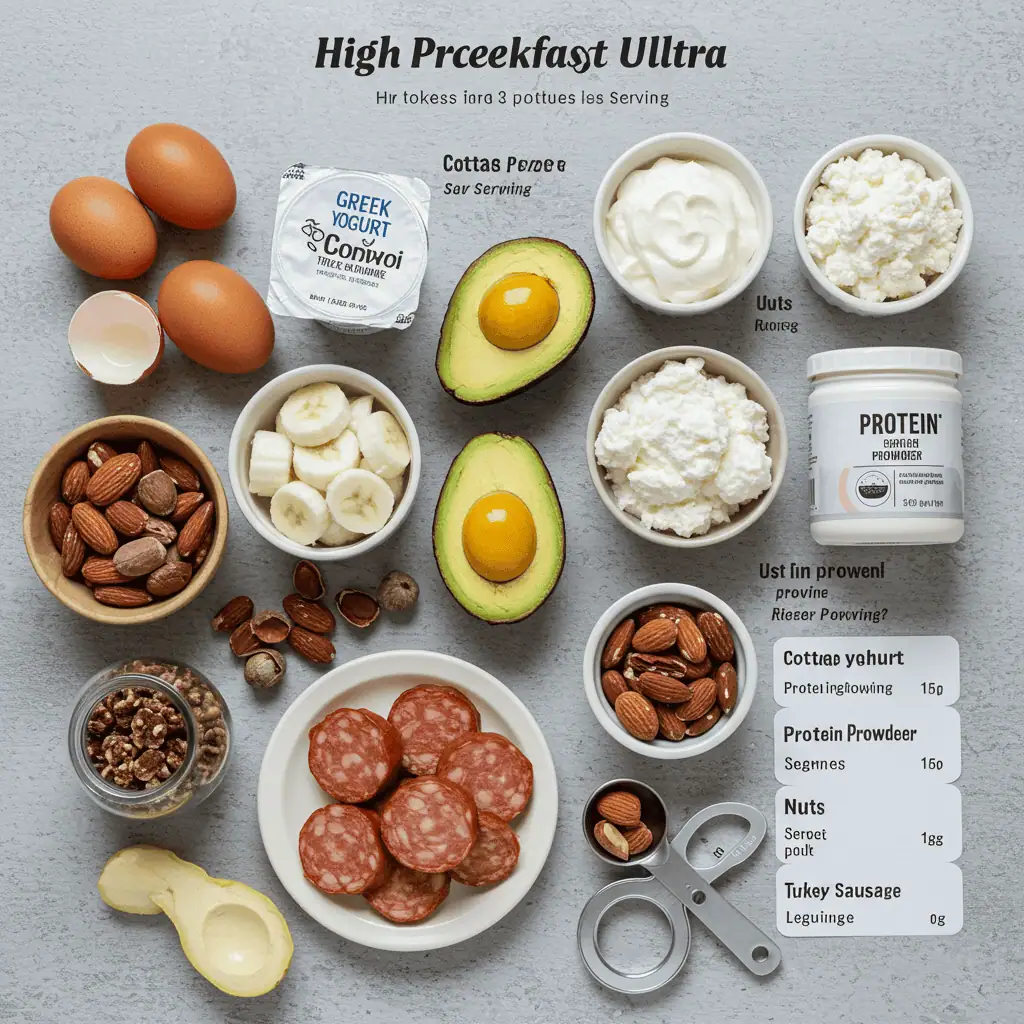
High protein breakfast ideas often begin with eggs due to their complete amino acid profile, bioavailability, and culinary versatility. A single large egg provides 6 grams of high-quality protein, but strategic preparation methods can significantly amplify protein content while maintaining palatability.
Cottage cheese scrambled eggs combine 8 oz cottage cheese with 6 whole eggs, creating 42 grams of protein per serving. Blend cottage cheese until smooth before incorporating with beaten eggs, then cook using low heat to maintain creamy texture. This technique increases protein density by 75% compared to eggs alone.
Protein powder egg pancakes utilize 2 scoops vanilla protein powder, 4 eggs, and 1/4 cup almond flour to create high-protein pancakes containing 45 grams of protein per serving. Blend ingredients until smooth, cook on medium heat, and serve with sugar-free syrup or fresh berries.
These methods integrate seamlessly with principles from our air fryer egg bites method while providing additional protein enhancement strategies.
Innovative Egg Applications
High protein breakfast ideas extend beyond traditional scrambling through creative cooking methods that preserve nutritional value while improving convenience and variety. Egg white casseroles maximize protein content while reducing calories and fat content for specific dietary goals.
Sheet pan egg bakes combine 12 eggs with 1 cup cottage cheese, diced vegetables, and chicken sausage to create meal-prep friendly portions containing 18 grams of protein per serving. Bake at 350°F for 25-30 minutes, then portion into individual containers for weekly breakfast preparation.
Protein-enhanced frittatas incorporate Greek yogurt or cottage cheese into traditional frittata recipes, increasing protein content by 40% while maintaining traditional flavors and textures. Use 8 eggs, 1/2 cup Greek yogurt, and preferred vegetables for 20 grams of protein per serving.
Greek Yogurt Power Combinations
Strategic Yogurt Selection
High protein breakfast ideas utilizing Greek yogurt require understanding protein variations between brands and fat content levels. Plain Greek yogurt provides 15-20 grams of protein per cup, but quality and manufacturing processes significantly impact nutritional density and taste satisfaction.
Strained yogurt preparation at home using regular yogurt and cheesecloth increases protein concentration while reducing cost. Strain overnight to remove whey, resulting in thicker consistency and 25% higher protein content compared to commercial Greek yogurt varieties.
Double protein yogurt bowls combine 1 cup Greek yogurt with 1 scoop vanilla protein powder, creating 35-40 grams of protein per serving. Add nuts, seeds, and berries for additional nutrients while maintaining protein focus.
Creative Yogurt Applications
High protein breakfast ideas expand yogurt applications beyond basic bowls through innovative preparation methods that enhance both nutrition and palatability. Yogurt-based smoothie bowls blend frozen fruits with protein-rich yogurt bases for thick, satisfying breakfast alternatives.
Protein yogurt parfaits layer Greek yogurt with homemade granola containing nuts and seeds, providing sustained energy release and 25 grams of protein per serving. Prepare multiple parfaits simultaneously for convenient grab-and-go options throughout the week.
Savory yogurt preparations utilize plain Greek yogurt as base for Mediterranean-inspired breakfast bowls featuring cucumber, tomatoes, olives, and herbs. Add hard-boiled eggs for additional protein, reaching 28 grams per serving.
These protein enhancements align with strategies from our high-protein breakfast ideas guide while maintaining dietary restriction compliance.
Meat and Poultry Integration
Lean Protein Selections
High protein breakfast ideas incorporating meat require strategic selection to optimize protein content while managing fat and calorie intake. Lean options provide maximum protein density without excessive saturated fat that can impair morning energy levels.
Turkey bacon alternatives contain 2-3 grams of protein per slice with significantly less fat than traditional pork bacon. Prepare 4-5 slices alongside scrambled eggs for 15 additional grams of morning protein without halal compliance concerns.
Chicken sausage breakfast bowls feature pre-cooked chicken sausage with sautéed vegetables and scrambled eggs, providing 25-30 grams of protein per serving. Choose brands without fillers or excessive sodium to maintain nutritional quality.
Ground turkey breakfast skillets combine 4 oz lean ground turkey with vegetables and eggs for protein-dense, one-pan meals containing 35 grams of protein. Season with herbs and spices to enhance flavor without adding calories.
Preparation Optimization
High protein breakfast ideas using meat require efficient preparation methods that preserve protein quality while fitting morning time constraints. Meal prep protein batches involve cooking large quantities of lean meats weekly for quick breakfast assembly.
Slow cooker breakfast preparations utilize overnight cooking to prepare protein-rich breakfast components. Combine chicken breast, vegetables, and seasonings for shredded protein ready for morning egg scrambles or breakfast bowls.
Sous vide protein preparation ensures perfect texture and moisture retention for lean meats that might otherwise become tough through traditional cooking methods. Cook chicken breast or turkey at 140°F for 2 hours for consistently tender results.
These preparation techniques integrate with guidance from our egg bite preparation methods while addressing specific challenges of dairy-free cooking.
Plant-Based Protein Innovations
Legume and Bean Applications
High protein breakfast ideas utilizing plant-based sources address growing dietary preferences while maintaining protein adequacy for optimal morning nutrition. Legumes provide complete proteins when combined strategically with complementary amino acid sources.
Black bean breakfast bowls combine 1/2 cup black beans with scrambled eggs, avocado, and salsa for 20 grams of protein plus fiber and beneficial phytonutrients. Prepare beans in large batches for convenient weekly meal assembly.
Chickpea flour pancakes create high-protein, gluten-free alternatives containing 12 grams of protein per serving. Mix 1 cup chickpea flour with water, seasonings, and vegetables for savory pancakes that satisfy morning hunger effectively.
White bean hummus breakfast spreads provide protein-rich alternatives to traditional spreads. Blend white beans with tahini and lemon for 8 grams of protein per 1/4 cup serving, perfect for whole grain toast topped with sliced hard-boiled eggs.
Nut and Seed Combinations
High protein breakfast ideas incorporating nuts and seeds require understanding protein content variations and optimal preparation methods for digestibility and nutritional availability. Raw nuts often provide superior nutrition compared to roasted varieties with added oils.
Almond butter power bowls combine 2 tablespoons natural almond butter with Greek yogurt and chia seeds for 20 grams of protein plus healthy fats and fiber. Choose almond butters without added sugars or oils for optimal nutritional quality.
Hemp seed breakfast toppers provide complete protein profiles with 10 grams per 3 tablespoons. Sprinkle over yogurt, oatmeal, or smoothie bowls for protein enhancement without flavor interference.
Homemade protein granola combines nuts, seeds, oats, and protein powder for crunchy breakfast additions containing 15 grams of protein per 1/2 cup serving. Bake in large batches for convenient weekly breakfast enhancement.
Quick Assembly Strategies
5-Minute Morning Solutions
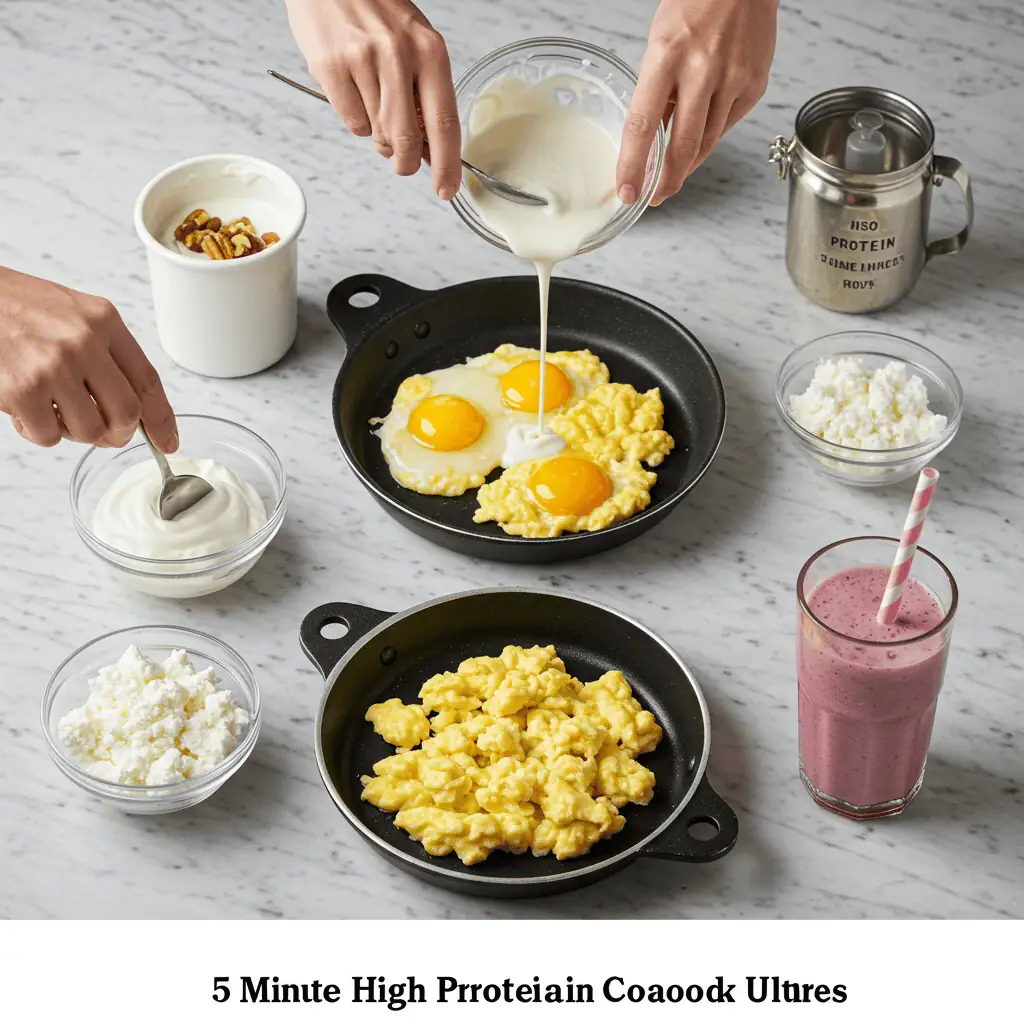
High protein breakfast ideas must accommodate real-world time constraints while maintaining nutritional quality and taste satisfaction. Strategic preparation and ingredient selection enable protein-rich breakfasts within minimal morning timeframes.
Protein smoothie foundations pre-portion frozen fruits, protein powder, and greens into individual containers for 30-second blending. Add liquid and blend for instant 25-gram protein breakfasts ready in under 2 minutes.
Overnight protein preparations utilize slow-setting ingredients that develop flavor and texture during refrigeration. Chia seed puddings, overnight oats with protein powder, and Greek yogurt parfaits require minimal morning assembly.
Grab-and-go protein combinations pair simple protein sources for instant nutrition. Hard-boiled eggs with string cheese, Greek yogurt with nuts, or protein bars with fruit provide 15-20 grams of protein without cooking or preparation.
These nutritional considerations support the comprehensive approach outlined in our egg bite storage and nutrition guide while addressing specific needs of restricted diets.
Strategic Meal Prep Applications
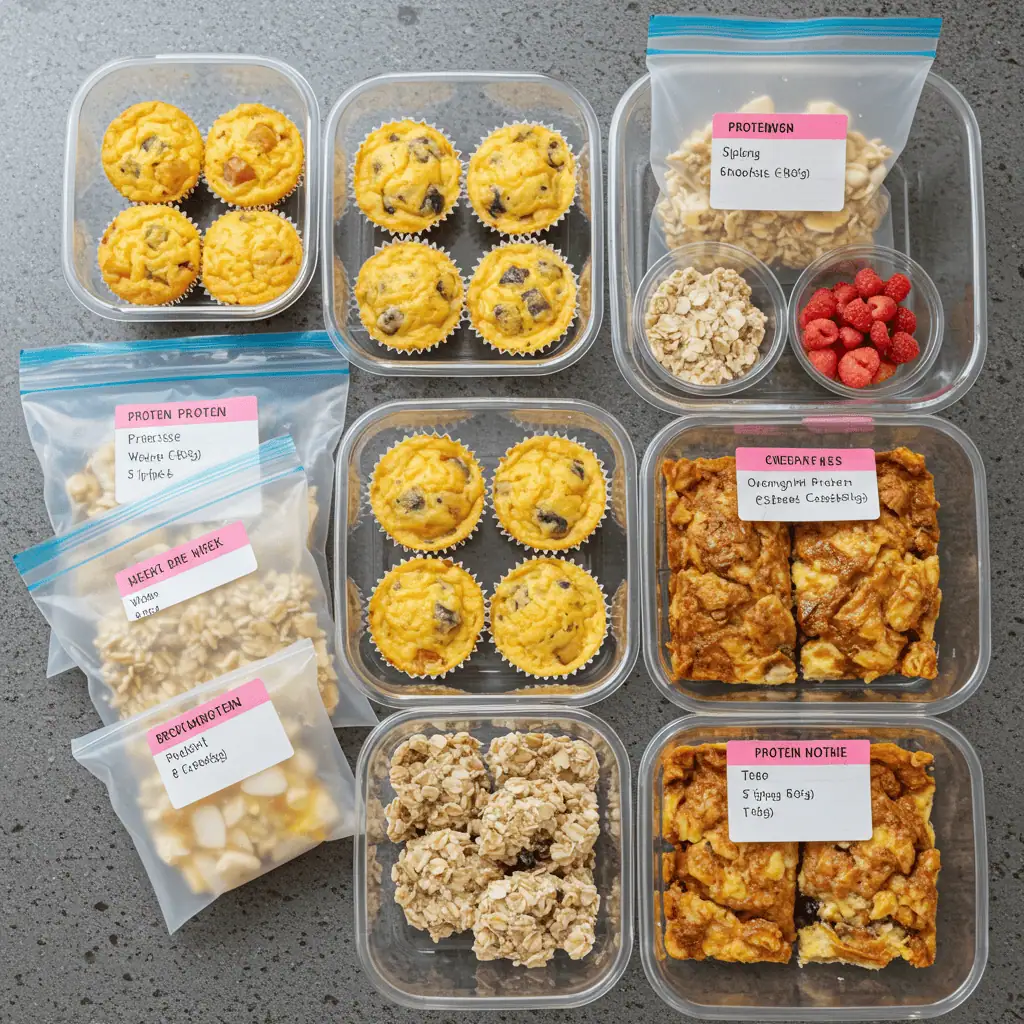
High protein breakfast ideas benefit significantly from advance preparation that reduces morning decision-making while ensuring consistent protein intake. Batch cooking and portioning strategies maximize time efficiency while maintaining food quality and safety.
Weekly protein prep sessions involve preparing multiple protein sources simultaneously for varied breakfast applications throughout the week. Cook hard-boiled eggs, prepare Greek yogurt parfaits, and portion nuts and seeds for grab-and-go convenience.
Freezer-friendly protein options include breakfast burritos, egg muffins, and protein pancakes that maintain quality after freezing and reheating. Prepare these items monthly for convenient breakfast solutions during busy periods.
Make-ahead protein bases like overnight oats, chia puddings, and yogurt combinations develop improved flavors and textures during refrigeration while providing convenient morning nutrition without cooking requirements.
These storage strategies integrate with comprehensive guidance from our meal prep egg bites guide while addressing specific considerations for dairy-free preparations.
Seasonal and Flavor Variations
Spring and Summer Adaptations
High protein breakfast ideas benefit from seasonal ingredient variations that provide nutritional diversity while maintaining protein adequacy and flavor satisfaction. Fresh seasonal produce enhances both nutrition and palatability of protein-rich breakfast preparations.
Berry protein combinations utilize fresh strawberries, blueberries, and raspberries with Greek yogurt and cottage cheese for antioxidant-rich breakfasts containing 25 grams of protein. Seasonal berries provide natural sweetness without added sugars.
Garden vegetable scrambles incorporate fresh herbs, tomatoes, and leafy greens with eggs and cheese for vitamin-dense, protein-rich meals. Use whatever vegetables are in season for optimal nutrition and cost-effectiveness.
Light protein salads feature hard-boiled eggs, cottage cheese, and fresh vegetables for refreshing warm-weather breakfasts that don’t require cooking. Add nuts and seeds for additional protein and healthy fats.
Fall and Winter Comfort Options
High protein breakfast ideas adapt to cooler weather through warming preparation methods and heartier ingredient combinations that provide sustained energy during colder months. Comfort food applications maintain protein focus while satisfying seasonal cravings.
Protein-enhanced oatmeal combines steel-cut oats with Greek yogurt, nuts, and protein powder for warming breakfasts containing 20 grams of protein. Add cinnamon and vanilla for comforting flavors without excess sugar.
Hearty breakfast casseroles utilize eggs, cottage cheese, vegetables, and lean meats for family-style breakfasts perfect for weekend meal prep. These warming dishes provide 25-30 grams of protein per serving.
Warm protein smoothies blend protein powder with warm almond milk, spices, and nut butters for comforting liquid breakfasts that provide protein warmth during cold mornings.
These troubleshooting approaches build upon principles from our egg bite variations guide while addressing specific challenges of dairy-free cooking.
Special Dietary Accommodations
Gluten-Free Protein Solutions
High protein breakfast ideas for gluten-free diets require careful ingredient selection and preparation methods that avoid cross-contamination while maintaining protein adequacy and breakfast satisfaction. Many traditional breakfast foods contain hidden gluten sources.
Certified gluten-free oats provide safe grain options for protein-enhanced breakfast preparations. Combine with Greek yogurt, nuts, and seeds for balanced nutrition without gluten exposure risks.
Quinoa breakfast bowls utilize complete protein grains for gluten-free breakfast bases containing 8 grams of protein per cup. Add eggs, nuts, and vegetables for comprehensive nutrition reaching 25 grams of protein per serving.
Rice-based protein options include brown rice breakfast bowls with eggs and vegetables, providing safe grain alternatives for individuals with celiac disease or gluten sensitivity.
Low-Carb and Keto Adaptations
High protein breakfast ideas for ketogenic diets emphasize high-fat, moderate-protein combinations that maintain ketosis while providing adequate morning nutrition. Strategic fat and protein ratios support metabolic goals while ensuring satiety.
Avocado egg combinations provide healthy fats with complete proteins for keto-friendly breakfasts. Baked avocado with eggs provides 15 grams of protein plus beneficial monounsaturated fats.
Cheese and egg preparations maximize fat and protein while minimizing carbohydrates. Cheese omelets, egg and cheese roll-ups, and crustless quiches provide keto-appropriate nutrition with 20-25 grams of protein.
Nuts and seed combinations offer portable, low-carb protein options perfect for busy mornings. Combine various nuts and seeds for complete amino acid profiles while maintaining ketogenic macronutrient ratios.
These protein enhancements align with strategies from our keto-friendly egg bite recipes while maintaining dietary restriction compliance.
Cost-Effective Protein Strategies
Budget-Friendly Protein Sources
High protein breakfast ideas must balance nutritional quality with financial accessibility to ensure sustainable long-term implementation. Strategic shopping and preparation methods maximize protein value while controlling costs.
Bulk egg purchases provide the most cost-effective complete protein available, often costing less than $0.25 per 6-gram serving. Buy eggs in larger quantities for significant per-unit savings.
Dried legume preparations offer substantial protein at minimal cost. Cook large batches of lentils, chickpeas, and black beans for versatile breakfast applications throughout the week.
Seasonal protein planning involves purchasing proteins when prices are lowest and utilizing preservation methods for extended use. Buy ground turkey in bulk when on sale and freeze in portion sizes.
Meal Planning Economics
High protein breakfast ideas benefit from strategic meal planning that reduces food waste while ensuring consistent protein intake. Planning reduces impulse purchases and optimizes ingredient utilization across multiple meals.
Cross-meal ingredient usage involves selecting proteins that work across breakfast, lunch, and dinner applications. Greek yogurt, eggs, and cottage cheese provide versatility while reducing shopping complexity.
Batch preparation economics demonstrate significant time and cost savings through large-quantity cooking sessions. Prepare multiple breakfast components simultaneously for efficient resource utilization.
Storage optimization prevents protein waste through proper refrigeration and freezing techniques. Understand storage requirements for different protein sources to maximize investment return.
Nutritional Optimization Principles
Micronutrient Enhancement
High protein breakfast ideas should complement protein intake with essential vitamins and minerals often deficient in modern diets. Strategic ingredient combinations address common nutritional gaps while maintaining protein focus.
Iron absorption optimization combines heme iron sources (eggs, meat) with vitamin C-rich foods (berries, peppers) for enhanced mineral uptake. This combination prevents iron deficiency while supporting protein utilization.
Calcium and vitamin D pairing through dairy or fortified alternatives supports bone health while providing protein. Greek yogurt, cottage cheese, and fortified plant milks offer both nutrients simultaneously.
B-vitamin optimization through whole food protein sources ensures adequate vitamins essential for protein metabolism. Eggs, meat, and nutritional yeast provide complete B-vitamin profiles.
Hydration and Protein Synergy
High protein breakfast ideas require adequate hydration for optimal protein digestion and utilization. Increased protein intake demands higher fluid intake for proper kidney function and nutrient transport.
Morning hydration protocols should begin before protein consumption to prepare digestive systems for efficient nutrient processing. Drink 16-20 oz water upon waking, then continue hydration throughout breakfast.
Protein timing optimization involves spreading protein intake throughout the day rather than consuming large amounts at single meals. Aim for 20-30 grams at breakfast for optimal muscle protein synthesis.
Digestive support strategies include adequate fiber intake and probiotic foods to support protein digestion and nutrient absorption. Include vegetables and fermented foods with protein-rich breakfasts.
These preparation techniques integrate with guidance from our egg bite preparation methods while addressing specific challenges of dairy-free cooking.
Creating consistent high protein breakfast ideas requires understanding protein’s physiological benefits, strategic ingredient selection, and practical preparation methods that fit real-world time constraints and budget considerations. Success depends on advance planning, quality ingredient sourcing, and sustainable preparation routines that support long-term dietary adherence while providing optimal morning nutrition for sustained energy and health.