How to Store and Reheat Egg Bites Without Losing Texture: Expert Guide

How to Store and Reheat Egg Bites Without Losing Texture: Expert Guide
How to store and reheat egg bites properly determines whether your carefully prepared breakfast remains creamy and delicious or becomes rubbery and unappetizing. Learning the correct techniques for storing and reheating egg bites ensures you maximize your meal prep investment while maintaining restaurant-quality texture throughout the week. These proven methods work perfectly with our Starbucks egg bites copycat recipe and any homemade variations you create.
Table of Contents
Mastering how to store and reheat egg bites transforms meal preparation from daily chore to weekly convenience, supporting consistent nutrition goals while preserving the delicate custard-like texture that makes these breakfast treats irresistible. Whether you’re batch-cooking for busy weekdays or preparing grab-and-go options for travel, proper storage and reheating techniques maintain quality that rivals freshly made versions.
Why Proper Storage and Reheating Matters
The Science of Egg Protein Structure
Understanding how to store and reheat egg bites begins with recognizing that egg proteins are delicate structures that continue changing even after cooking. Improper storage allows moisture loss and protein degradation that creates tough, rubbery textures when reheated. Conversely, excess moisture from poor storage techniques leads to soggy, unappetizing results.
The key to maintaining texture when you store and reheat egg bites lies in controlling temperature fluctuations and moisture levels. Egg proteins remain tender when gradually cooled and gently reheated, but rapid temperature changes cause proteins to contract and expel moisture, resulting in dense, chewy textures.
Economic Benefits of Proper Techniques
Learning how to store and reheat egg bites effectively extends their usable life from 2-3 days to 6-7 days refrigerated, or up to 3 months frozen. This extension significantly reduces food waste while maximizing the value of your meal prep time and ingredient investments.
Proper storage techniques when you store and reheat egg bites also maintain nutritional value, ensuring the protein content and vitamin levels remain stable throughout the storage period. Poor storage methods can degrade both taste and nutrition, essentially wasting your careful preparation efforts.
Meal Prep Success Factors
Successful meal prep depends entirely on your ability to store and reheat egg bites while maintaining their original quality. Without proper techniques, even perfectly prepared egg bites become disappointing breakfast experiences that discourage continued meal preparation efforts.
The convenience factor of meal prep only works when you can store and reheat egg bites confidently, knowing they’ll taste as good as fresh versions. This reliability encourages consistent healthy eating habits and supports long-term nutrition goals.
Essential Cooling Techniques
Proper Cooling Fundamentals
The foundation of successfully storing and reheating egg bites begins with proper initial cooling. Allow freshly baked egg bites to cool completely to room temperature before any storage attempts. This cooling period typically requires 45-60 minutes, depending on ambient temperature and humidity levels.
Rushing the cooling process when you plan to store and reheat egg bites later creates condensation that leads to soggy textures and potential bacterial growth. The cooling process allows internal temperatures to equalize and proteins to set fully before storage stress occurs.
Air Circulation Importance
Position cooling egg bites on wire racks rather than leaving them in baking molds or on solid surfaces. Proper air circulation prevents moisture accumulation on bottom surfaces that can compromise texture when you store and reheat egg bites.
Avoid covering warm egg bites with any materials during cooling, as trapped steam creates moisture that interferes with successful storage. Complete air exposure during cooling ensures even temperature reduction and prevents surface moisture that affects how well you can store and reheat egg bites later.
Temperature Monitoring
Use an instant-read thermometer to verify that egg bite centers reach room temperature (around 70°F/21°C) before storage. This verification ensures you’re ready to store and reheat egg bites without risking temperature-related texture issues.
Internal temperatures that remain elevated when you attempt to store and reheat egg bites create condensation in storage containers, leading to water accumulation that makes reheating less successful.
Refrigerator Storage Best Practices
Container Selection for Storage
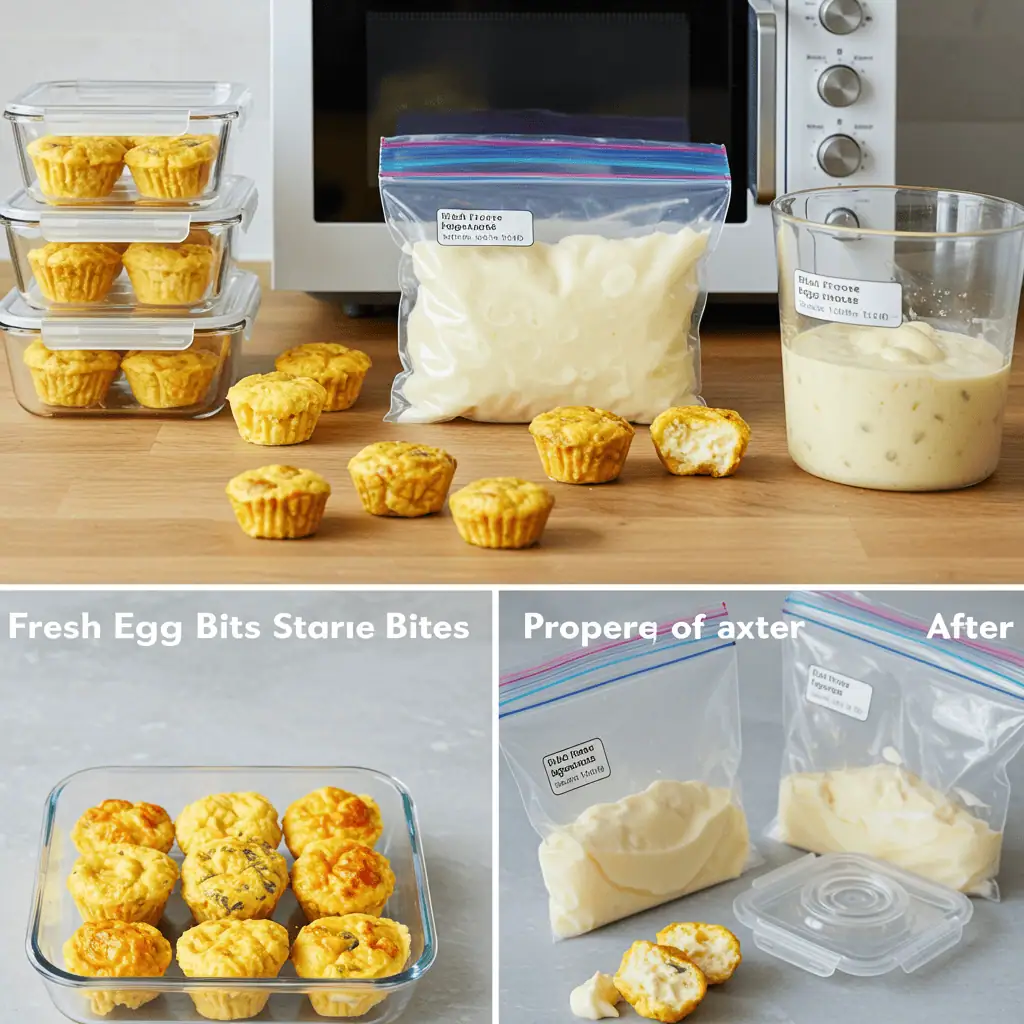
Choose airtight glass containers with secure-fitting lids when you store and reheat egg bites for refrigerator storage. Glass containers don’t absorb odors or stains and provide excellent moisture control that maintains quality when you store and reheat egg bites throughout the week.
Avoid plastic containers for long-term storage when you plan to store and reheat egg bites repeatedly, as plastic can absorb flavors and may not provide adequate moisture barriers for optimal quality preservation.

Layering Techniques
When you store and reheat egg bites in batches, layer them carefully with parchment paper between levels to prevent sticking and moisture transfer. This separation allows easy removal of individual servings without disturbing the entire batch.
Never stack egg bites directly on top of each other when you store and reheat egg bites, as the weight can compress lower layers and create dense textures that don’t reheat well.
Labeling and Organization
Label all containers with preparation dates and flavor varieties when you store and reheat egg bites for multiple weeks. This organization system ensures proper rotation and helps track freshness for optimal quality when you store and reheat egg bites.
Include reheating instructions on labels when you store and reheat egg bites in family kitchens where multiple people access the stored items. Clear instructions ensure consistent results regardless of who handles the reheating process.
Optimal Placement
Store containers of egg bites in the main refrigerator compartment rather than door areas where temperature fluctuations are common. Stable temperatures are crucial when you store and reheat egg bites to maintain consistent quality.
Keep stored egg bites away from strong-smelling foods like onions or fish, as eggs can absorb odors that affect flavor when you store and reheat egg bites after several days.
Freezer Storage Methods
Flash Freezing Technique
Implement flash freezing when you plan to store and reheat egg bites for extended periods. Place cooled egg bites on parchment-lined baking sheets and freeze for 2-3 hours until solid before transferring to permanent storage containers.
Flash freezing prevents egg bites from sticking together, allowing you to remove individual portions when you store and reheat egg bites over several months. This technique maintains shape integrity and makes portioning effortless.
Long-Term Storage Containers
Use freezer-safe containers or vacuum-sealed bags when you store and reheat egg bites for maximum storage life. Remove as much air as possible to prevent freezer burn that degrades both flavor and texture.
Double-wrap individual egg bites in plastic film before placing in freezer bags when you store and reheat egg bites frequently. This extra protection prevents moisture loss and freezer burn that compromise quality.
Freezer Organization
Organize frozen egg bites by preparation date and flavor when you store and reheat egg bites regularly. First-in, first-out rotation ensures you use older batches before quality degradation occurs.
Store frozen egg bites in easily accessible freezer locations when you store and reheat egg bites as daily breakfast options. Convenient placement encourages consistent use and prevents forgotten batches from occupying freezer space unnecessarily.
Thawing Protocols
Always thaw frozen egg bites in the refrigerator overnight when you plan to store and reheat egg bites the following day. Gradual thawing preserves texture better than rapid thawing methods like microwave defrosting.
Never thaw egg bites at room temperature when you store and reheat egg bites, as this creates temperature conditions that encourage bacterial growth and compromise food safety.
Microwave Reheating Techniques
Power Level Control
Use 70% power when you store and reheat egg bites in the microwave to prevent overcooking that creates rubbery textures. Lower power levels allow gentle, even heating that preserves the original creamy consistency.
Avoid full power when you store and reheat egg bites, as high heat creates hot spots and uneven heating that results in some areas becoming overcooked while others remain cold.
Timing Guidelines
Heat refrigerated egg bites for 45-60 seconds when you store and reheat egg bites using 70% microwave power. Start with shorter times and add 15-second intervals as needed to prevent overcooking.
When you store and reheat egg bites from frozen, use 50% power for 90-120 seconds, allowing standing time between heating intervals for even temperature distribution.
Moisture Preservation
Cover egg bites with slightly damp paper towels when you store and reheat egg bites in the microwave. This creates steam that prevents surface drying while heating occurs.
Place a small microwave-safe bowl of water in the microwave when you store and reheat egg bites to create additional humidity that maintains moisture during the heating process.
Safety Considerations
Allow heated egg bites to rest for 30-60 seconds after microwaving when you store and reheat egg bites, as internal temperatures continue rising and hot spots need time to equalize.
Test internal temperatures with a fork before consuming when you store and reheat egg bites, ensuring they’re heated through without being overcooked.
Alternative Reheating Methods
Air Fryer Method
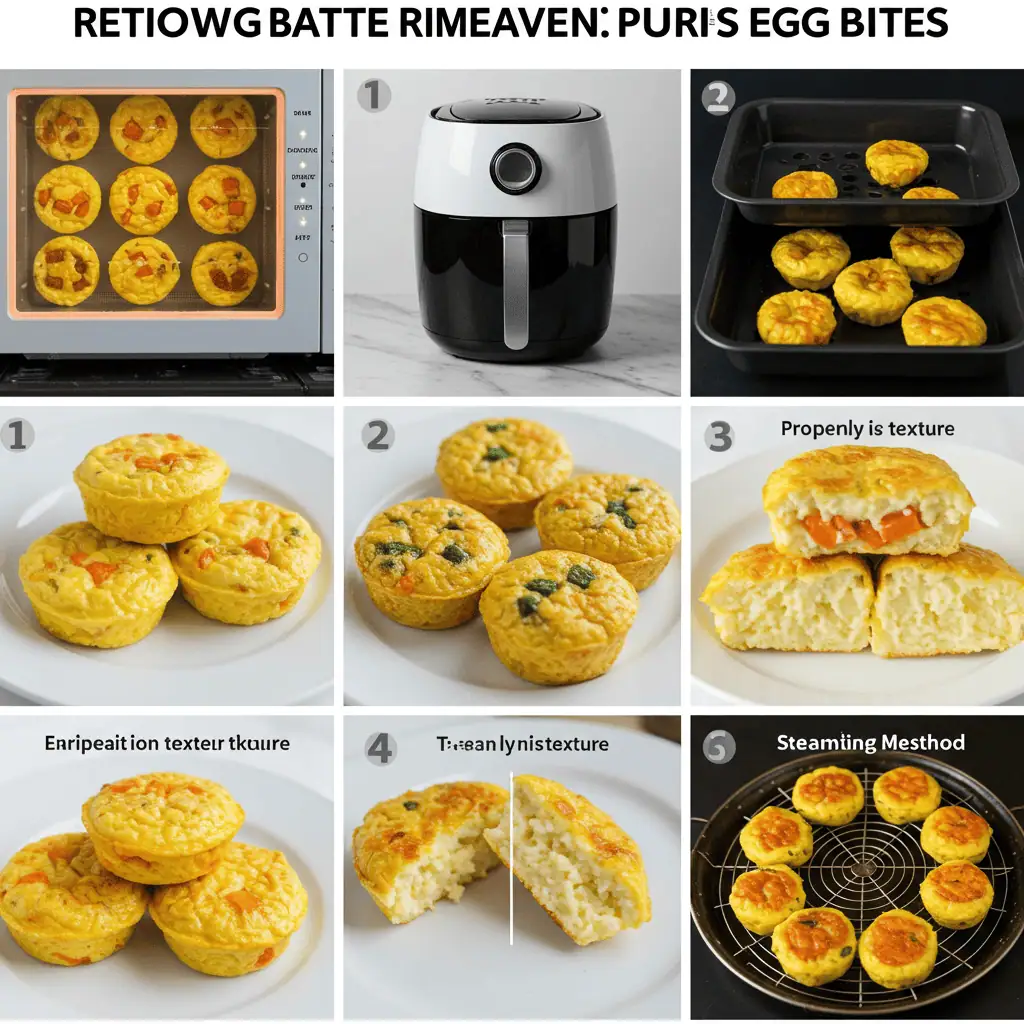
Use air fryer reheating when you store and reheat egg bites and prefer crispy exteriors. Set temperature to 300°F (149°C) and heat for 3-4 minutes, which works perfectly with our air fryer egg bites method for consistent results.
Monitor carefully when you store and reheat egg bites in air fryers, as the circulating air can overcook surfaces quickly if timing isn’t precise.
Oven Reheating
Preheat oven to 300°F (149°C) when you store and reheat egg bites using conventional oven methods. Place egg bites on baking sheets and heat for 8-10 minutes until warmed through.
Cover with foil when you store and reheat egg bites in the oven to prevent surface drying while internal temperatures rise adequately.
Steaming Method
Use steamer baskets when you store and reheat egg bites for the gentlest possible reheating. Steam for 3-5 minutes, which preserves moisture and texture exceptionally well.
This method works best when you store and reheat egg bites that you want to maintain maximum creaminess and don’t mind slightly longer reheating times.
Toaster Oven Techniques
Set toaster ovens to 275°F (135°C) when you store and reheat egg bites in smaller batches. Heat for 5-7 minutes, monitoring to prevent overcooking in the smaller cooking chamber.
Use the lowest rack position when you store and reheat egg bites in toaster ovens to prevent excessive top browning during the reheating process.
Texture Preservation Strategies
Moisture Management
Control moisture levels carefully throughout the entire process when you store and reheat egg bites. Too much moisture creates soggy textures, while too little causes dryness and toughness.
Monitor condensation in storage containers when you store and reheat egg bites, wiping away excess moisture that accumulates over time to maintain optimal texture.
Temperature Gradients
Avoid extreme temperature changes when you store and reheat egg bites by allowing gradual transitions between storage and serving temperatures. Gradual changes preserve protein structure and maintain creamy textures.
Remove egg bites from refrigeration 10-15 minutes before reheating when you store and reheat egg bites, allowing them to approach room temperature for more even heating.
Ingredient Considerations
Consider original ingredients when you store and reheat egg bites, as some components like vegetables may release additional moisture during storage that affects reheating success.
Egg bites with higher fat content (cream, cheese) tend to store and reheat better than lean versions, as fats help maintain moisture and tenderness during the storage process.
Quality Indicators
Assess texture quality when you store and reheat egg bites by checking for springiness and avoiding versions that feel dense or rubbery before reheating attempts.
Monitor color changes when you store and reheat egg bites, as significant darkening or fading may indicate quality degradation that affects both taste and texture.
Common Storage Mistakes
Temperature Abuse
Avoid storing warm egg bites when you store and reheat egg bites later, as inadequate cooling creates condensation that leads to poor texture and potential safety issues.
Never leave egg bites at room temperature for extended periods when you store and reheat egg bites, as the temperature danger zone encourages bacterial growth and quality degradation.
Container Issues
Don’t use containers that aren’t airtight when you store and reheat egg bites, as air exposure causes moisture loss and surface drying that creates poor reheating results.
Avoid overcrowding containers when you store and reheat egg bites, as insufficient space prevents proper air circulation and creates uneven storage conditions.
Timing Errors
Don’t store egg bites beyond recommended timeframes when you store and reheat egg bites, as extended storage periods lead to quality degradation regardless of storage method quality.
Avoid reheating egg bites multiple times when you store and reheat egg bites in large batches, as repeated heating cycles degrade texture and may create safety concerns.
Packaging Problems
Never wrap egg bites while still warm when you store and reheat egg bites, as trapped heat creates condensation that ruins texture and may encourage bacterial growth.
Don’t use inadequate wrapping when you store and reheat egg bites for freezer storage, as freezer burn significantly impacts both flavor and texture quality.
Quality Assessment Guidelines
Visual Inspection
Check for color changes when you store and reheat egg bites, looking for any darkening, fading, or unusual discoloration that indicates quality loss or potential spoilage.
Examine surfaces for mold growth when you store and reheat egg bites after several days, particularly around edges where moisture might accumulate during storage.
Texture Evaluation

Test firmness gently when you store and reheat egg bites by pressing lightly with clean fingers. Proper texture should feel slightly springy rather than hard or mushy.
Assess surface condition when you store and reheat egg bites, avoiding any that feel slimy or excessively dry, as these indicate storage problems that affect reheating success.
Aroma Assessment
Smell egg bites before reheating when you store and reheat egg bites to detect any off odors that indicate spoilage or quality degradation that makes consumption inadvisable.
Fresh egg bites should maintain pleasant, mild aromas when you store and reheat egg bites properly, without sour, ammonia, or other unpleasant smells.
Safety Indicators
Discard egg bites that show any signs of spoilage when you store and reheat egg bites, as safety should always take precedence over avoiding food waste.
Trust your instincts when you store and reheat egg bites – if something seems off about appearance, smell, or texture, it’s better to err on the side of caution.
Frequently Asked Questions
How long can I store egg bites in the refrigerator?
When you store and reheat egg bites properly in airtight containers, they maintain quality for 5-6 days in the refrigerator. Always cool completely before storage and label with preparation dates for best results.
Can I freeze egg bites for meal prep?
Yes, you can store and reheat egg bites from frozen storage for up to 3 months. Use flash freezing techniques and proper wrapping to prevent freezer burn and maintain texture quality.
What’s the best way to reheat frozen egg bites?
Thaw frozen egg bites overnight in the refrigerator, then store and reheat egg bites using 70% microwave power for 45-60 seconds. Cover with damp paper towels to maintain moisture during reheating.
Why do my reheated egg bites become rubbery?
Rubbery texture when you store and reheat egg bites typically results from excessive heat or reheating time. Use lower power levels and shorter time intervals to preserve the original creamy texture.
Can I reheat egg bites more than once?
Avoid reheating egg bites multiple times when you store and reheat egg bites, as repeated heating cycles degrade texture and may create food safety concerns. Reheat only the portions you plan to consume immediately.
How do I prevent condensation in storage containers?
Ensure egg bites are completely cool before storage when you store and reheat egg bites. Use airtight containers and wipe away any condensation that accumulates during storage to maintain quality.
What containers work best for storing egg bites?
Glass containers with airtight lids work best when you store and reheat egg bites, as they don’t absorb odors and provide excellent moisture control for maintaining texture quality.
How can I tell if stored egg bites have gone bad?
Look for visual changes, off odors, or unusual textures when you store and reheat egg bites. Trust your senses – if anything seems wrong with appearance, smell, or feel, discard them for safety.
Conclusion
Mastering how to store and reheat egg bites transforms meal prep from frustrating experience to convenient success story. Proper cooling, storage, and reheating techniques preserve the delicate texture and rich flavors that make these breakfast treats worthwhile, ensuring your meal prep investment pays dividends throughout the week.
The techniques outlined here work consistently whether you store and reheat egg bites made from our basic recipes or complex variations with multiple ingredients. Understanding the science behind protein behavior and moisture control empowers you to adapt these methods to any egg bite recipe or storage situation.
Success with storing and reheating egg bites encourages continued meal prep efforts, supporting healthy eating habits while saving time and money. Master these fundamental techniques, and you’ll enjoy restaurant-quality breakfast options whenever convenient, making nutritious eating effortless despite busy schedules.