French Toast Casserole For Dinner: Easy 45-Minute Family Breakfast Bake


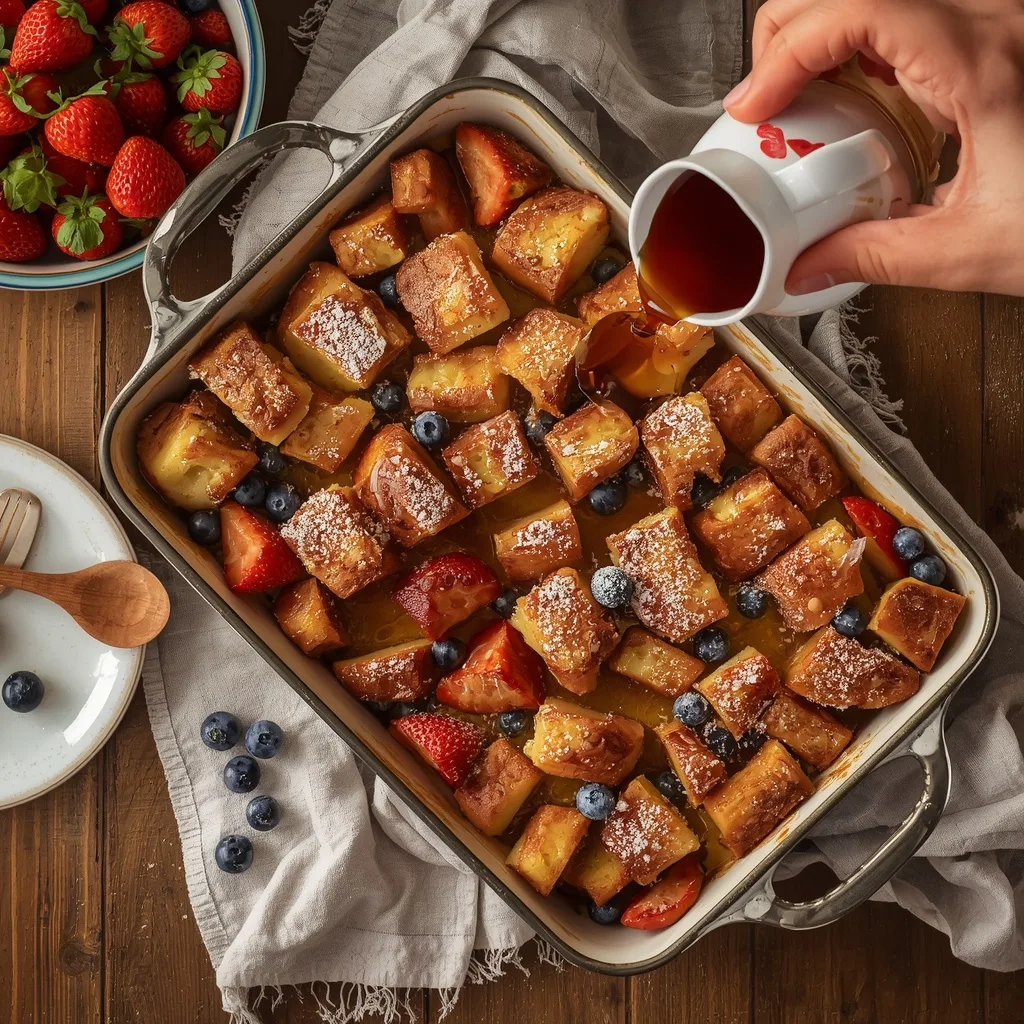
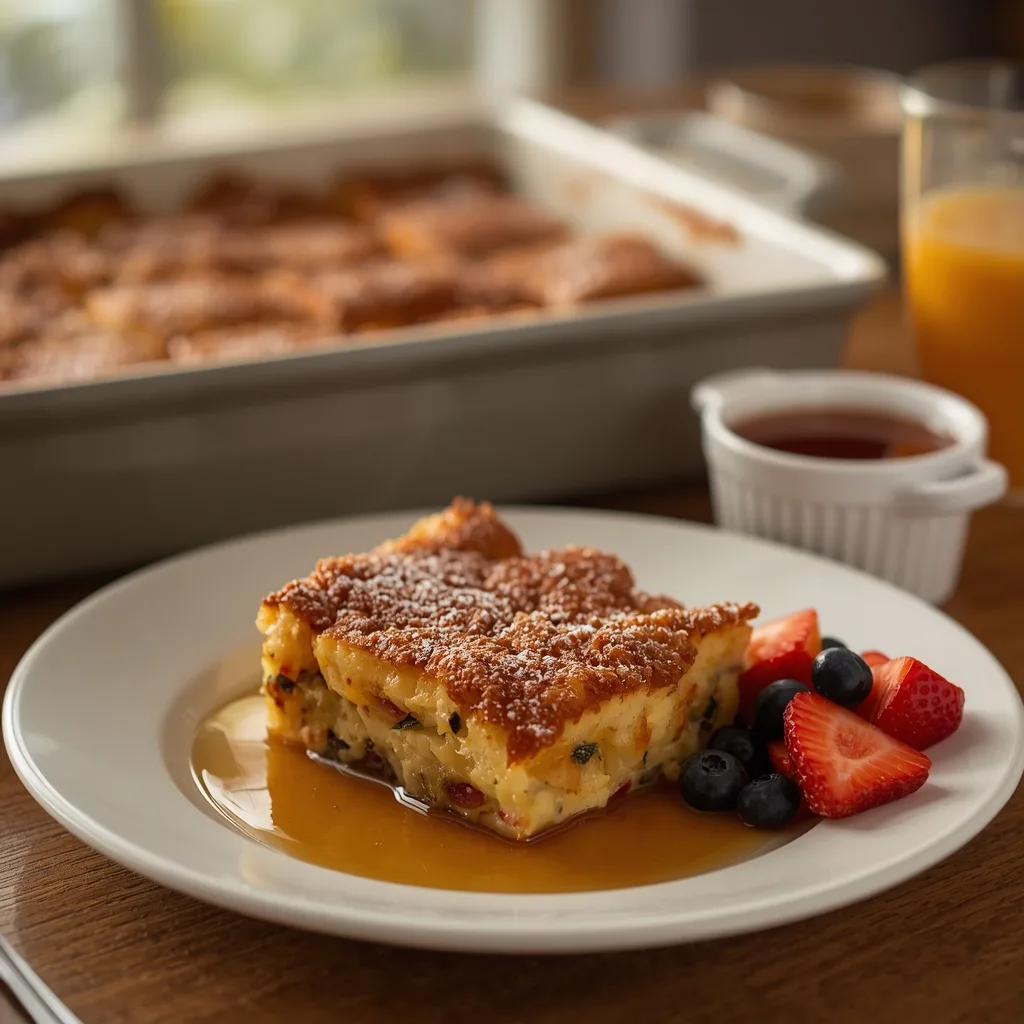
There is exactly one dinner that makes my children sprint to the table without being called twice. Not pizza. Not tacos. This french toast casserole for dinner — and specifically the moment they hear the brown sugar crust cracking under the serving spoon. I discovered this power by accident one Saturday when we had half a loaf of brioche going stale and a fridge full of eggs that needed using. I threw it together as a dinner experiment, set it on the table with a bowl of fresh strawberries and a bottle of maple syrup, and then watched all three kids eat two servings without a single complaint about vegetables.
That was two years ago. We now have it quarterly, always on a night when someone needs cheering up. It’s officially on the family’s Greatest Hits list, right between Tater Tot Casserole and Loaded Breakfast Hash. And the secret — which I’ll tell you upfront — is that the bread soaks in the custard OVERNIGHT. Ten minutes of work the night before, and tomorrow’s dinner is practically done.
Why You’ll Love This Recipe
- Overnight prep = zero effort at dinner time. Assemble the night before, refrigerate, bake straight from the fridge the next evening. The hardest part of dinner is turning on the oven.
- Feeds 8 generously. This is the casserole you make when family is coming, when there are playdates, or when you simply want leftovers for breakfast the next morning — which are, honestly, as good as the dinner version.
- The brown sugar crust. A butter-and-brown-sugar topping scattered over the top before baking caramelizes into a crackling praline-like crust that makes this more dessert-for-dinner than anyone should admit in polite company.
- Halal from start to finish. Eggs, bread, milk, butter, sugar, vanilla — nothing to swap, nothing to check. The most straightforwardly halal recipe in the entire Breakfast For Dinner collection.
Ingredients
For the casserole (serves 8):
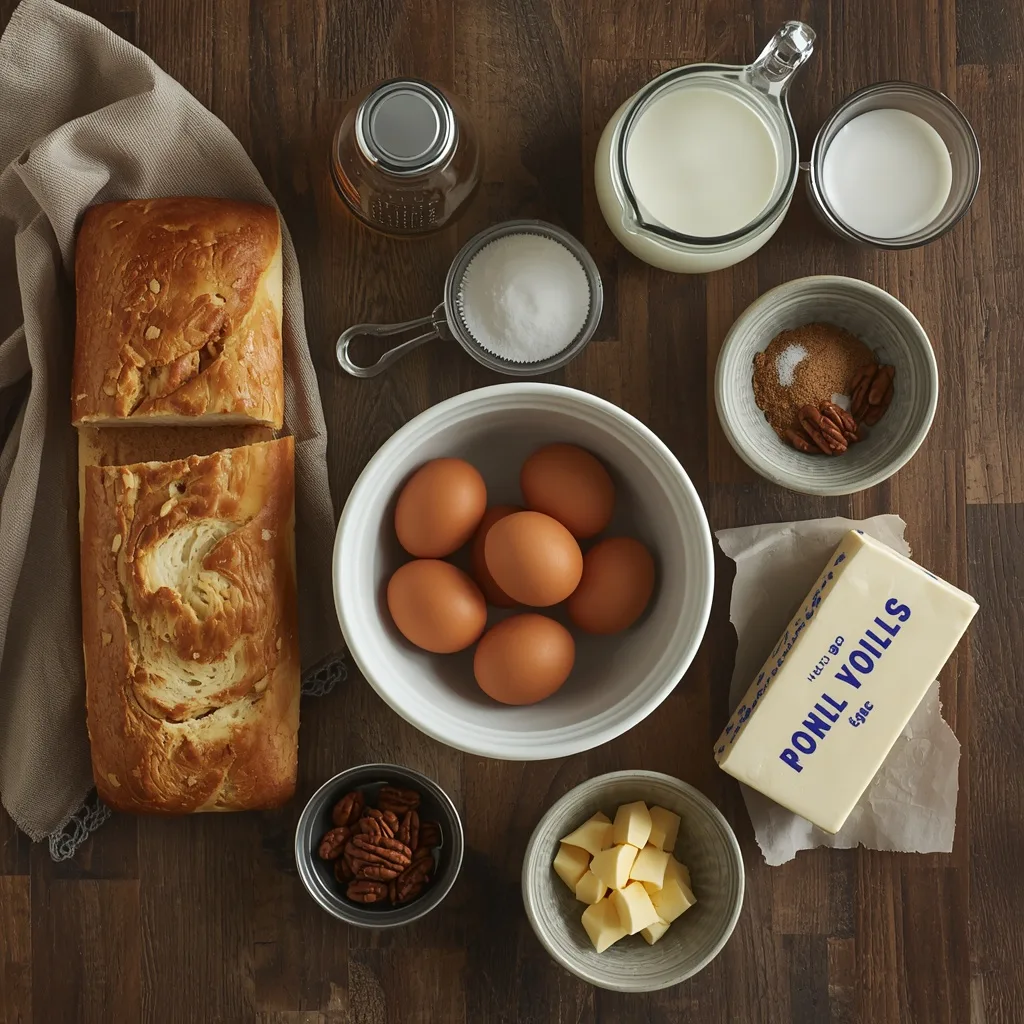
- 1 loaf (about 16 oz / 450g) brioche, challah, or thick-cut white bread, cut or torn into 1.5-inch cubes (day-old or slightly stale is ideal)
- 8 large eggs
- 2 cups (480ml) whole milk
- 1/2 cup (120ml) heavy cream (or half-and-half)
- 1/3 cup (65g) granulated sugar
- 2 tsp vanilla extract
- 1.5 tsp ground cinnamon
- 1/4 tsp ground nutmeg
- Pinch of salt
For the brown sugar crust:
- 1/3 cup (70g) packed brown sugar
- 3 tbsp (45g) unsalted butter, cut into small cubes
- 1 tsp cinnamon
- Optional: 1/3 cup chopped pecans (check they are from a halal-certified facility if your family follows strict certification — plain pecans are naturally fine)
To serve:
- Maple syrup (warm it — it matters)
- Fresh berries, sliced banana, or powdered sugar
- Optional: whipped cream
Substitutions
- Bread: Brioche gives the richest result — buttery, soft, soaks up custard beautifully. Challah is an excellent second. Regular sandwich bread works but produces a denser result; if using it, reduce milk by 1/4 cup. Avoid sourdough — its tang fights the sweet custard.
- Heavy cream: Half-and-half works perfectly. Whole milk alone produces a slightly less custardy result but is still delicious. Don’t use low-fat milk — the custard won’t set properly and you’ll get a soggy casserole instead of a creamy one.
- Vanilla extract: Use the real thing here, not imitation. This is a simple recipe and vanilla is doing significant flavor work — imitation vanilla tastes like what it is.
- Pecans: Skip entirely if nut allergies are a concern. The brown sugar crust is already spectacular without them.
What I Learned The Hard Way
1. I used fresh bread. Fresh bread floats in the custard and stays on top instead of absorbing it, and after baking the center is soggy while the top is dry. Day-old bread — left out on the counter overnight before you make the custard — is the right texture: slightly dry so it drinks up every drop of custard and becomes uniformly custardy throughout. If your bread is fresh, cut it and spread it on a sheet pan in a 300°F oven for 10 minutes to dry it out first.
2. I skipped the overnight soak. Impatience produced a casserole where the custard hadn’t fully penetrated the bread — the outer layer was beautifully custardy, the center was dry. Minimum soak: 4 hours. Overnight: the correct answer. The bread needs time, and time costs nothing.
3. I added the brown sugar topping before refrigerating. By morning, the brown sugar had completely dissolved into the top layer of bread, taking the crunch with it. The brown sugar and butter go on COLD, right before the casserole goes in the oven — that’s when they caramelize into the crust you want, not before.
Instructions
The night before (10 minutes):
Step 1 — Prep the bread. If using fresh bread, dry it in a 300°F oven for 10 minutes first. Grease a 9×13 inch baking dish generously with butter. Spread the bread cubes evenly in the dish.
Step 2 — Make the custard. Whisk together eggs, milk, cream, sugar, vanilla, cinnamon, nutmeg, and salt until completely combined and no streaks of egg white remain. Pour evenly over the bread, pressing down gently so every cube makes contact with the custard. Cover tightly with plastic wrap and refrigerate overnight (or minimum 4 hours).
The next evening (35 minutes):
Step 3 — Add the crust. Pull the casserole from the fridge. Mix brown sugar, cinnamon, and butter (and pecans if using) and scatter evenly over the top — the butter pieces will melt as it bakes and create the caramelized crust.
Step 4 — Bake. Preheat oven to 350°F (175°C). Bake uncovered 35-40 minutes until the custard is set (a knife inserted in the center comes out clean, not wet) and the top is deep golden and crackling. If the top browns too fast, tent loosely with foil for the last 10 minutes.
Step 5 — Rest and serve. Let it sit 5 minutes before serving — the custard continues to set and the crust firms up. Serve warm with maple syrup and whatever your family considers a fruit serving.
Pro Tips
- Press down on the bread. When you pour the custard over, press the bread pieces firmly into the liquid — every cube should be submerged or at least touching the custard. Stragglers that stay dry bake up hard and chewy.
- Room temperature eggs make a smoother custard. Cold eggs mix less evenly — let them sit on the counter for 15 minutes before whisking if you remember.
- The knife test is more reliable than the timer. Ovens vary. Insert a knife in the dead center — if it comes out clean, it’s done. If it comes out wet and eggy, give it 5 more minutes and check again.
Storage
- Fridge: Leftovers keep 3 days covered. Reheat individual portions in the microwave 60-90 seconds, or the whole dish in a 325°F oven for 15 minutes covered with foil.
- The next-morning breakfast: This is arguably the best use of leftovers on this site. Cold french toast casserole straight from the fridge, reheated with a fresh drizzle of maple syrup — my eldest has started requesting dinner portions sized for tonight AND tomorrow morning simultaneously.
- Freezer: Freeze after baking in individual portions for up to 2 months. Thaw overnight in the fridge, reheat in the oven. The texture softens slightly on thaw but the flavor is entirely intact.
- Make-ahead full bake: You can bake it the night before and reheat the whole dish the next evening at 325°F covered for 20 minutes. Convenient for gatherings, slightly less spectacular crust — worth knowing the trade-off.
What to Serve With It
The casserole is rich and sweet, so the table benefits from something fresh alongside: a big bowl of mixed berries or sliced strawberries, a green salad with a light lemon dressing (the contrast is better than it sounds), or simply fresh orange juice and the understanding that dinner is dessert tonight and everyone is better for it.
For the full Breakfast For Dinner experience at its most complete, my Breakfast Casserole For Dinner is the savory counterpart to this sweet version — same one-dish format, opposite flavor profile. And the full collection lives in my Breakfast For Dinner roundup.
One Tip Nobody Mentions
Butter the plastic wrap before covering. When you cover the casserole overnight, the bread rises slightly as it absorbs the custard and can stick to the plastic — and peeling stuck plastic off custard-soaked bread in the morning is a small misery that ruins the mood before the day starts. A quick spray or smear of butter on the underside of the wrap takes two seconds and the casserole releases perfectly every time. I have never seen this in a french toast casserole recipe. I learned it from ruining the top of an otherwise perfect casserole thirty minutes before guests arrived.
FAQs
Can I make this french toast casserole for dinner without overnight soaking? Yes, but adjust your expectations: a same-day bake needs at least 4 hours of soaking minimum, and the custard penetration won’t be as even. If you’re truly in a hurry, cut the bread smaller (1-inch cubes instead of 1.5-inch) so the custard reaches the center faster, and extend the bake by 5 minutes to compensate.
How do I know when the casserole is done? The knife test: insert a thin knife into the center of the casserole. It should come out clean with no wet egg custard clinging to it. The top should be deep golden, the edges should be pulling slightly from the sides of the dish, and you should be able to hear the faintest crackling sound from the crust. If any doubt: 5 more minutes.
Can I use a smaller dish? A 9×9 inch dish works with half the recipe (serves 4). Use 4 eggs, adjust liquids proportionally, and reduce bake time to 25-30 minutes. I recommend this size for weeknight family dinners when you don’t want the full 8-serving batch.
Is this appropriate for kids who don’t like eggs? The egg flavor in a properly made custard is subtle — it’s richness, not scrambled-egg taste. The kids who “hate eggs” in this house have eaten this casserole enthusiastically for two years without connecting it to eggs. That said, your children may be more discerning than mine.
Can I add fruit to the casserole itself? Yes — blueberries or sliced bananas layered into the bread before pouring the custard are both wonderful. Strawberries release too much water and make the casserole soggy. Fresh fruit as a topping is always the safer bet.
A Quick Note on the Eggs
Eight eggs in one casserole sounds like a lot until you do the math — one egg per serving, which is a perfectly reasonable amount for a dinner dish. According to Healthline’s review of eggs and cholesterol, current research shows that for most healthy people, eating eggs as part of a balanced diet doesn’t raise cardiovascular risk the way it was once believed — which makes this custard-rich dinner considerably less guilt-laden than its reputation suggests.
Nutrition (Per Serving — Serves 8, with pecans)
| Nutrient | Amount |
|---|---|
| Calories | 420 |
| Protein | 12g |
| Carbohydrates | 48g |
| Fiber | 1g |
| Fat | 20g |
| Saturated Fat | 10g |
| Sodium | 380mg |
Estimates based on brioche and whole milk. Using half-and-half instead of heavy cream saves approximately 30 calories per serving.
RELATED_ARTICLES:
French Toast Casserole For Dinner

Thick brioche cubes soaked overnight in a cinnamon-vanilla custard, baked with a brown sugar caramel crust until golden and crackling — the sweet breakfast-for-dinner the whole family runs to the table for.
- Prep Time: 10 mins
- Cook Time: 8 hours 40 mins
- Total Time: 8 hours 50 mins
- Yield: 8 servings 1x
- Category: Dinner / Breakfast For Dinner
- Method: Oven / Bake
- Cuisine: American
- Diet: Halal
Ingredients
For the casserole (serves 8):
- 1 loaf (about 16 oz / 450g) brioche, challah, or thick-cut white bread, cut or torn into 1.5-inch cubes (day-old or slightly stale is ideal)
- 8 large eggs
- 2 cups (480ml) whole milk
- 1/2 cup (120ml) heavy cream (or half-and-half)
- 1/3 cup (65g) granulated sugar
- 2 tsp vanilla extract
- 1.5 tsp ground cinnamon
- 1/4 tsp ground nutmeg
- Pinch of salt
For the brown sugar crust:
- 1/3 cup (70g) packed brown sugar
- 3 tbsp (45g) unsalted butter, cut into small cubes
- 1 tsp cinnamon
- Optional: 1/3 cup chopped pecans (check they are from a halal-certified facility if your family follows strict certification — plain pecans are naturally fine)
To serve:
- Maple syrup (warm it — it matters)
- Fresh berries, sliced banana, or powdered sugar
- Optional: whipped cream
Instructions
1. Grease a 9×13 baking dish. Fill with bread cubes.
2. Whisk eggs, milk, cream, sugar, vanilla, cinnamon, nutmeg and salt. Pour over bread, press down so every cube absorbs custard. Cover with buttered plastic wrap and refrigerate overnight (minimum 4 hours).
3. Next day: preheat oven to 350°F (175°C). Mix brown sugar, butter and cinnamon; scatter over the cold casserole.
4. Bake uncovered 35-40 minutes until custard is set (clean knife test) and top is deep golden. Rest 5 minutes before serving.
5. Serve warm with maple syrup and fresh berries.
Notes
Day-old bread is essential — fresh bread floats and doesn’t absorb custard properly. Add the brown sugar topping RIGHT BEFORE baking, never before refrigerating. Butter the underside of the plastic wrap to prevent sticking. The knife test is more reliable than the timer — insert in the center, it should come out clean.
Nutrition
- Serving Size: 1/8 of casserole
- Calories: 420 kcal
- Sugar: 22g
- Sodium: 380mg
- Fat: 20g
- Saturated Fat: 10g
- Unsaturated Fat: 10g
- Trans Fat: 0g
- Carbohydrates: 48g
- Fiber: 1g
- Protein: 12g
- Cholesterol: 215mg